Central Flinders Maintenance

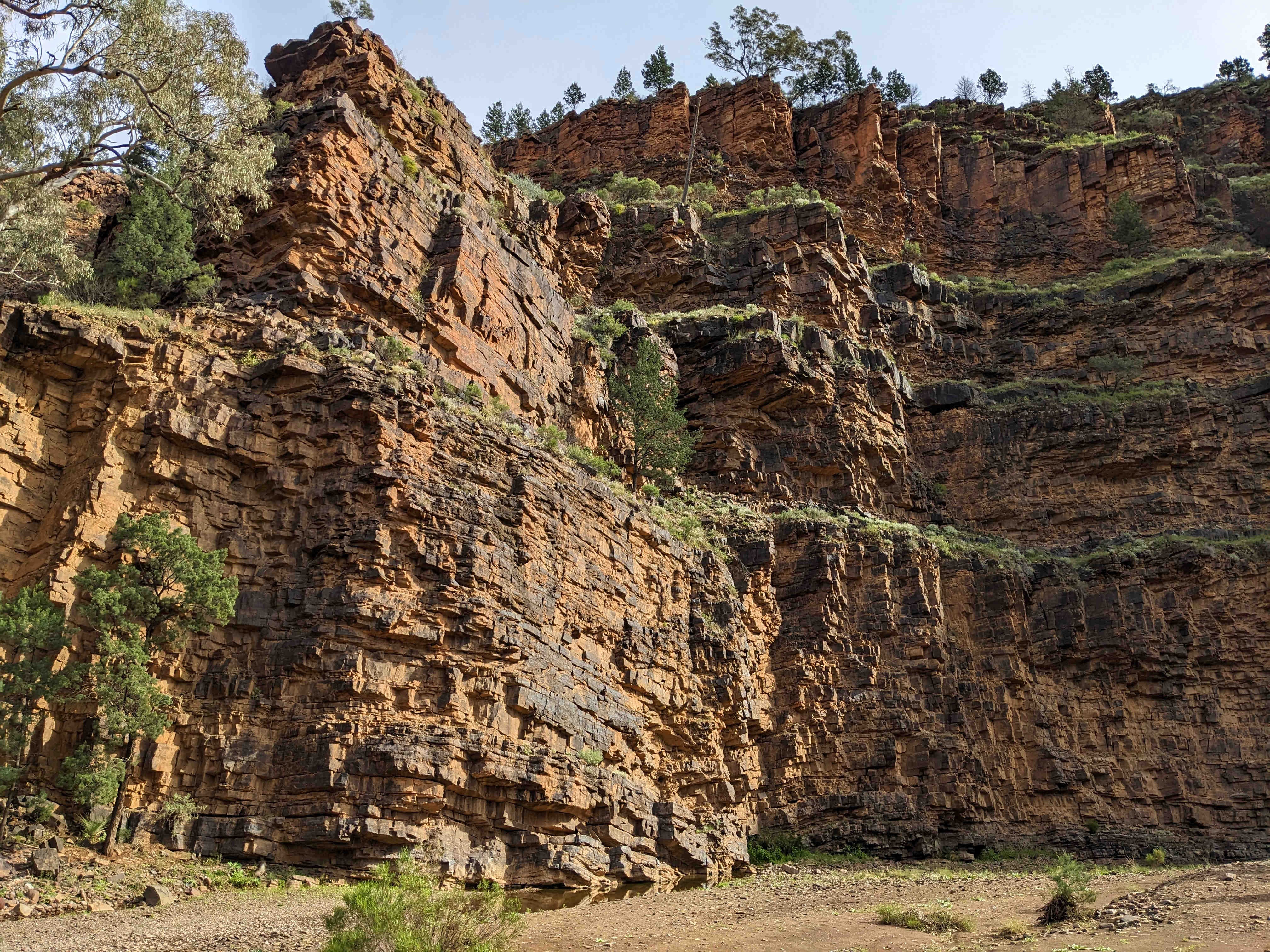
The beautiful ABC Range Quartzite (very approx. 590 Ma) gorge on the Yuluna Circuit…
For the past 2 weeks WTSG volunteers worked on 6 walking tracks in the central Flinders Ranges. It was cold and wet. Overnight temps dropped to 4 deg C, daytime temps were around 13 or 14. And it rained. The trailheads are accessible only by dirt roads and 2 major roads were closed for a couple of days. But the hardy workers achieved so much - replacing posts washed away in the autumn rain, replacing worn decals, scraping tracks, chain-sawing and removing fallen trees.. A very productive maintenance session.
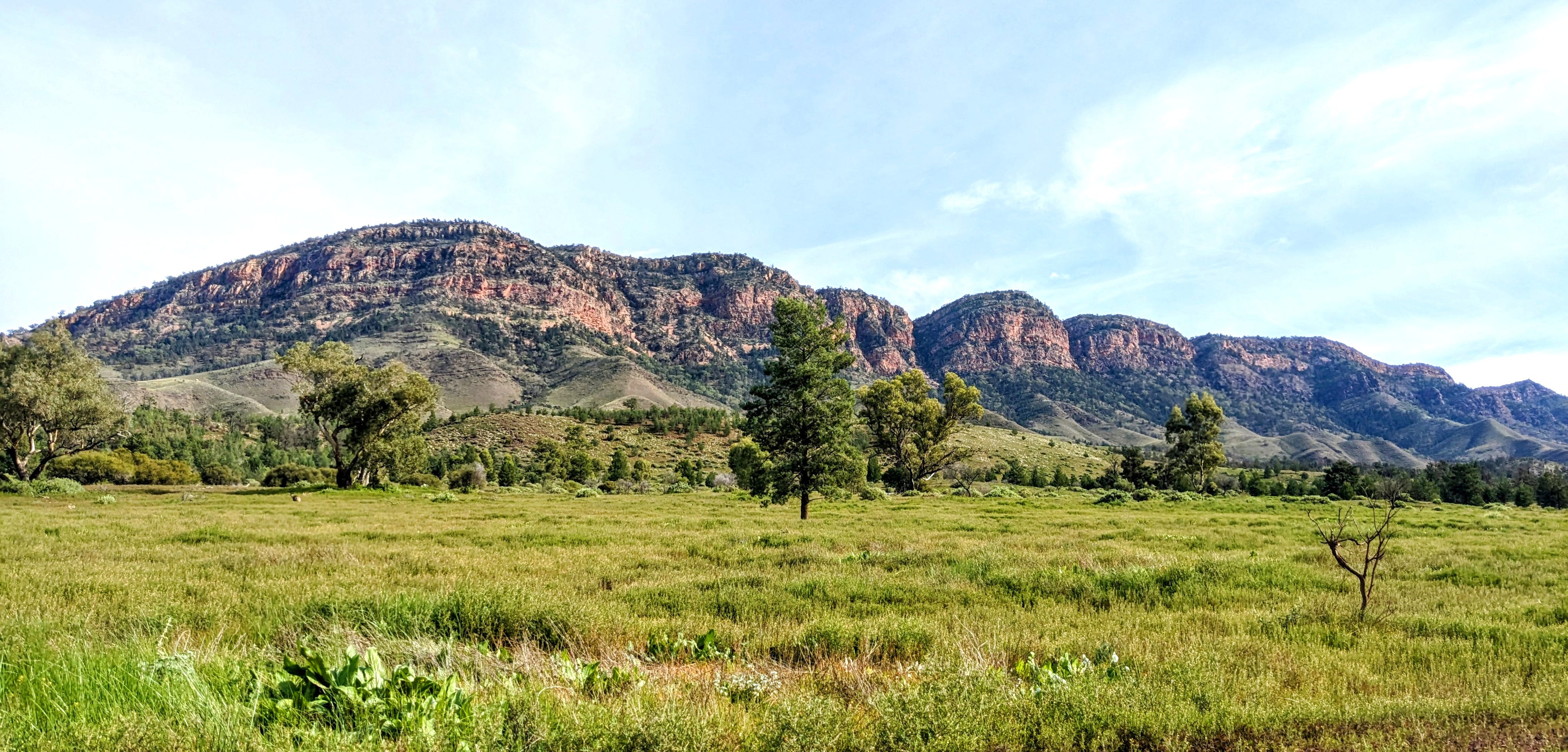
While the rain earlier in the year caused creek flooding, it also produced lush, green fields and a great season for wildlife. Many emus, wallabies, kangaroos and birds. The view above is to the much-photographed (and painted) Heysen Range - younger Rawnsley Quartzite, approx. 540 Ma, and host to the Ediacaran fossils.
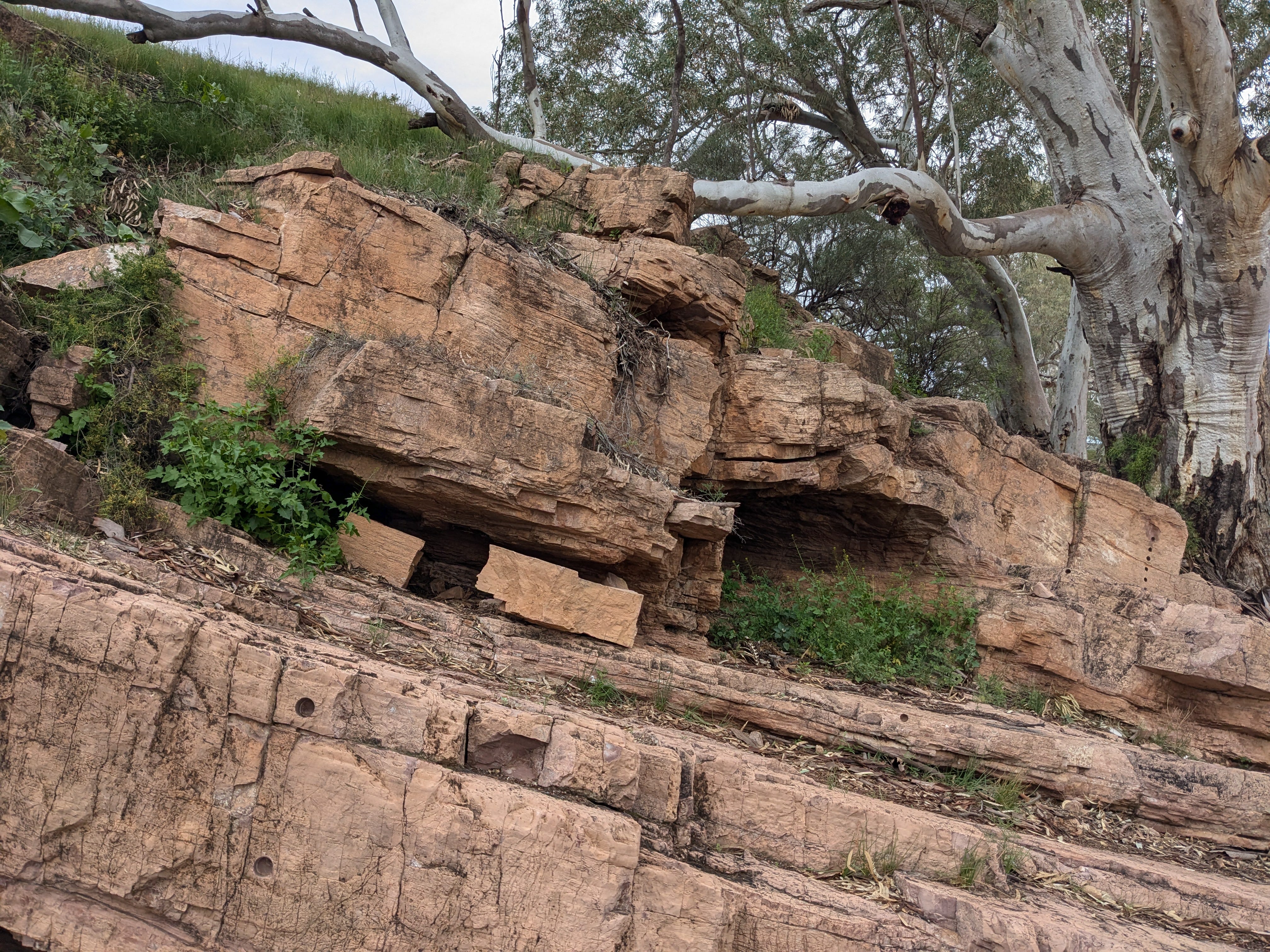
One of the walks takes in the ‘Golden Spike’, the southern hemisphere’s only GSSP (currently). It marks the start of the Ediacaran Period 635 - 539 Ma, from the end of the Cryogenian to the start of the Cambrian. The basal layer is the pale Nuccaleena Formation shown here in Enorama Creek - dolomite laid down as a thin layer of cap carbonate after many millions of years of severe glaciation (sometimes referred to as ‘Snowball Earth’). Walking back in time, east along Enorama Creek, over the Elatina Formation glacial tillite and onto the inter-glacial Trezona Formation (~645 Ma) of hard, blocky limestone interbedded with softer siltstone. Here you can see a beautiful exposure of stromatolites on the edge of the creek..
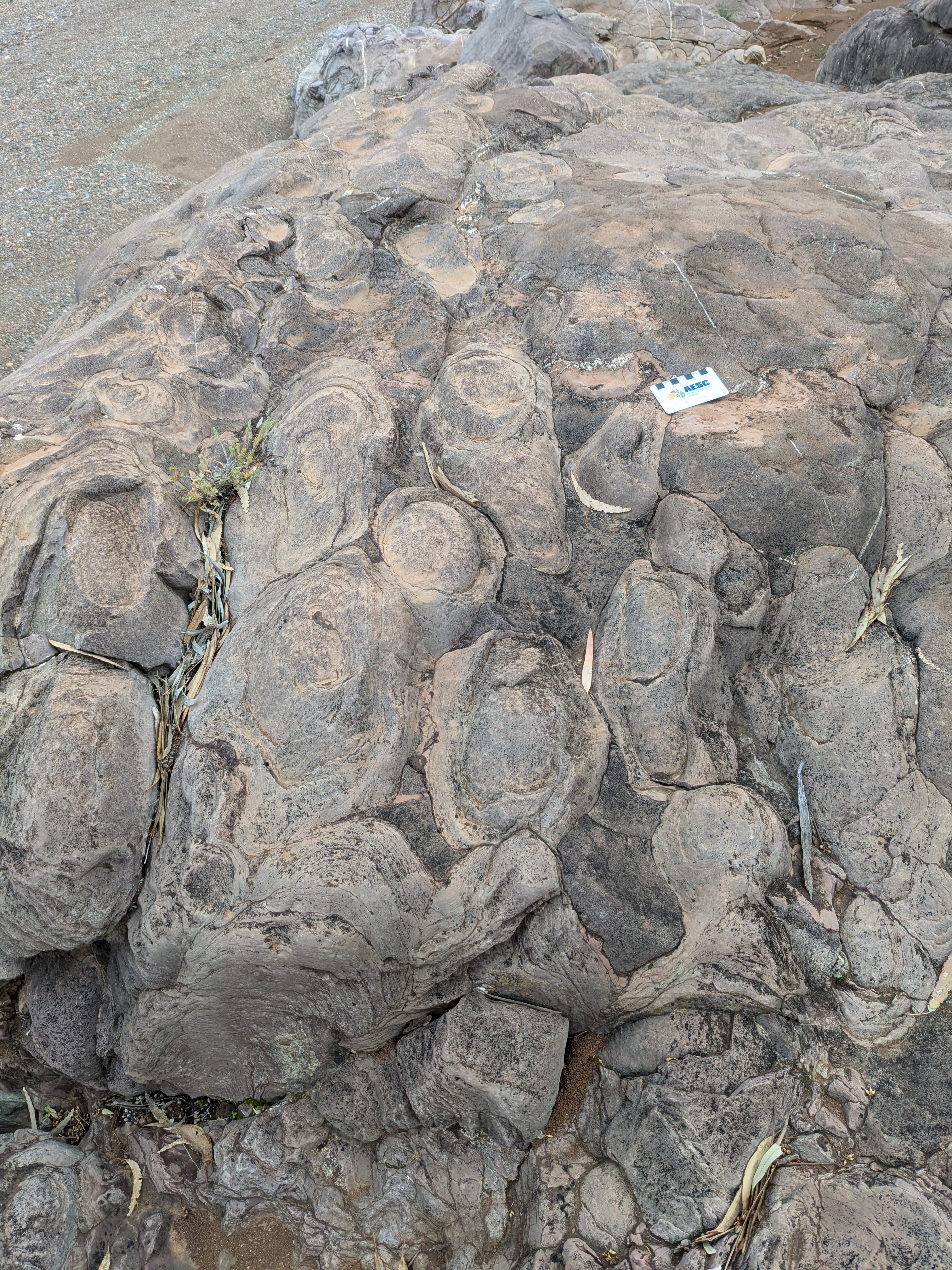
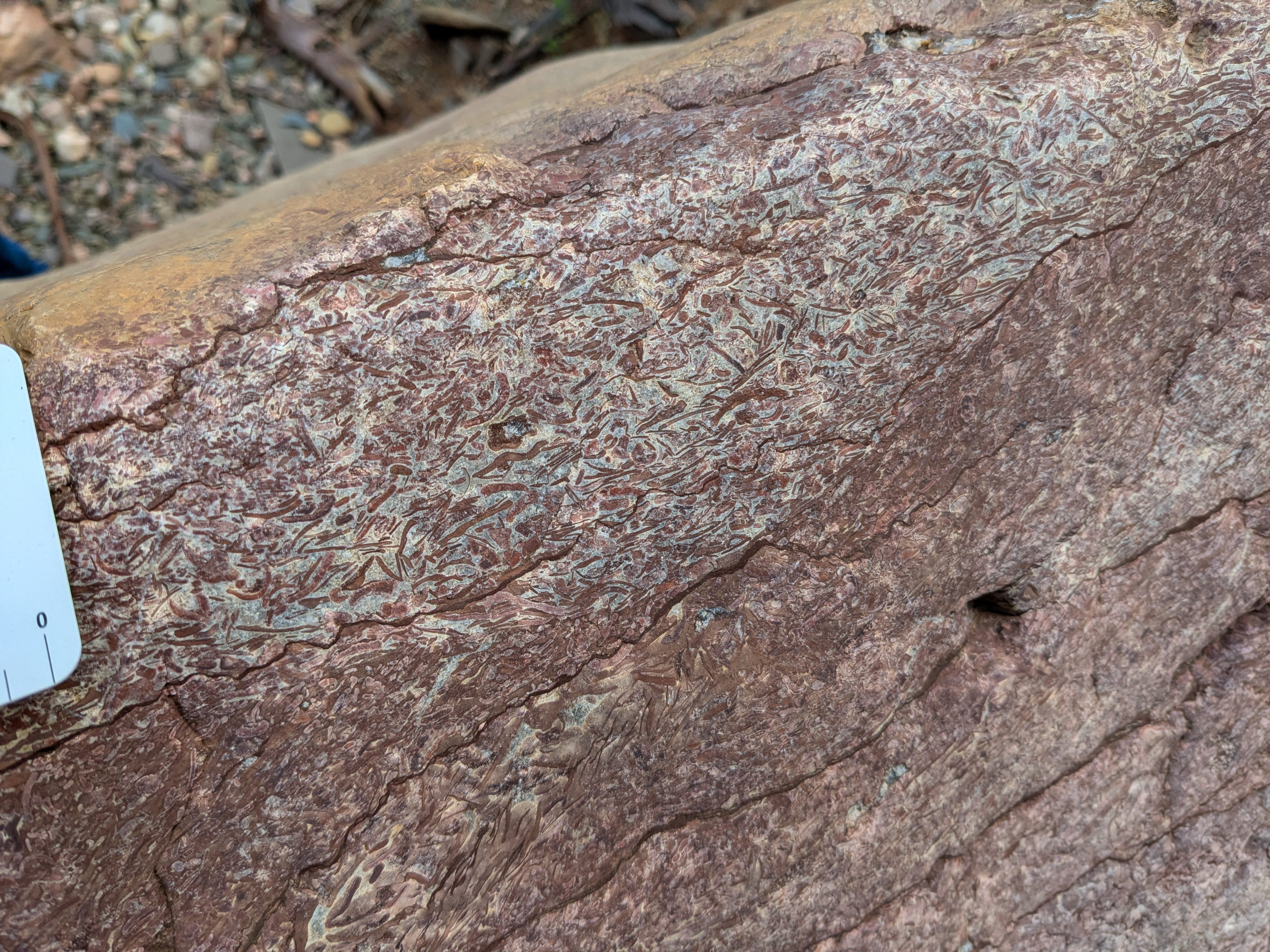
And in the creek, there are examples of stunning ‘Mawson Hieroglyphics’. When the stromatolites are broken up by storm activity, intra-formational conglomerates are formed, consisting of algal flakes cemented by calcite. This gives the rock a very distinctive texture that Sir Douglas Mawson called heiroglyphic in 1938.